Between the grime and the sublime

By Khaled Diab

Istanbul is one of those cities where a sojourn of a few days is simply not enough. In fact, it is the kind of place where one can imagine a couple of weeks expanding into several years.


Photo: ©2005 K. Maes/K. Diab

July 2005


Arriving in a place can sometimes feel like slipping into new shoes: you’re not sure if they are the right size until you break them in. With Istanbul, the shoe fitted straight away. Almost immediately, I eased myself into the city like a comfortable pair of old trainers. In fact, Constantinople – as it was known pre-Ataturk – has both the grace of crystal slippers and the gritty earthliness of a pair of dusty sandals. It has lost the glory and lustre of being the capital of a powerful empire but it still has charm.


Perhaps this instant sense of familiarity was because the city occupies a comfortable middle ground – a cultural frontier haven – between the two sides of my upbringing. You can go mosque-hopping and visit the shrine of a Muslim saint during the day. In the evening, you can rub shoulders with trendy young Turks while sipping a beer at a street-side café.


In a way, the city triggered a touch of nostalgia because it brought back memories of the Cairo I’d left behind a few years previously. The physical space resembled that other manic metropolis, albeit a somewhat wealthier version: the hustle and bustle, the heaving crowds, the chaos and disorderliness, and the visible trappings of a Muslim city.


Whereas the physical overlap is significant, the cultural intersection is less than one might, at first sight, assume. This is, in some measure, a question of relativity, a statistical variance. The two cities have their conservative and progressive ends of the spectrum. However, the cultural median in Istanbul lies at the more permissive end of the scale.


In short, Istanbul is a more chilled out version of Cairo – a Cairo which may or may not have existed many decades ago, but one, nonetheless, that I would like to return.


As in Cairo, the most progressive Istanbulites appear to be part of an elite, albeit a larger and less isolated one than its Egyptian counterpart. However, if one were to take alcohol consumption and headscarves as crude indices, then Turks, in general, are more relaxed than Egyptians.


Photo: ©2005 K. Diab

Pencilled in skyline

Istanbul’s magnificent skyline will remain one of the most enduring images I will have of the city: mosques with their pencil-thin minarets – such as those belonging to the Sulemaniya – and palaces – like Topkapi – dominating hilltops along the Bosphorus.


At the edge of the spice bazaar – which is called the Misir (Egypt) market for some reason – was the even more bizarrely named Yeni Cami (New Mosque). The trouble with names is that, once coined, they tend to stagnate, barring a revolution or a foreign invasion. At over 400 years old, this mosque was beginning to find its name a little outdated. How many times must the poor building have shrugged its ancient arches as yet another newcomer or visitor to the town remarked:  “It doesn’t look very new to me.”


The powerful Valide Sultan Safiye – the mother of Sultan Mehmet III who was an effective backstage co-regent, first with her husband Murad and then her son; she ruled from the haremlik in classic Ottoman fashion – ordered the building of the New Mosque in 1597. But, after four centuries, the name has lost its original shine and it’s about time someone put it out of its misery and renamed it!


The mosque, itself, is an atmospheric building with something of a bluish hue surrounding it, yet no one refers to this mosque as the Blue Mosque – that’s reserved for the Sultanahmet which doesn’t look at all blue, but has blue tiles on the walls inside.


Flocks of pigeons swarm around the stairs of the Yeni Cami, taking off and landing, waiting for people to feed them. We watched the dynamic interaction between boy, bread and birds on the steps. Inside the grounds, there is a courtyard with a shrine in the middle. In the actual mosque stand beautiful high domes, gentle colours, gold-rimmed walls and immaculate Arabic calligraphy.


Interestingly, we could, with our knowledge of Arabic script, read old Turkish plaques and inscriptions over the entrances of mosques and markets, but we could not understand them. Conversely, a modern Turk usually can’t decode the script but can understand the words once uttered – although the vocab, which is much more Arabic-based, would strike him or her as somewhat archaic.


@2005 K. Diab

The mosque makes an eye-catching backdrop, if you happen to be sitting at one of the cafés under the Galata Bridge, an area that used to house Istanbul’s fish market and is still home to hundreds of amateur anglers who were all casting off from the bridge above our heads.


With Katleen and the mosque over her shoulder looking a picture of harmony, and with the shimmering and loud mumbling of the Bosphorus to my left, I was becoming somewhat distracted from our backgammon game. As we sipped our apple tea and rolled the dice in our longstanding duel, the curious waiter asked where we were from.


I said “Misir” and the waiter replied “Mirhaba! (Welcome!).” We chatted for a while. After this exchange, I heard, in Arabic, from over my shoulder, “You’re from Egypt, are you?” At the next table along, a guy was sitting with his back to me. “I’m Egyptian, too,” he said, dragging on his shisa, his features distorted momentarily in the pall of smoke rising from the flume of his mouth.


Osama, as it turned out, lives and works in Greece, where he trades cars. He was here on a brief getaway with his English girlfriend who was in their hotel resting. Always eager to mine people for ideas for places to visit, I asked what he’d done in the three days he’d been in Istanbul. I was disappointed to learn that, besides partaking of the city’s nightlife around the trendy Taksim Square, they had only seen the Aya Sofia and the Sultanahmet (Blue) Mosque across the road from it.


“We’re thinking of seeing some more sights, but we don’t know what yet,” he admitted in blissful ignorance of the charms of the city he was in.


Photo: ©2005 K. Maes/K. Diab

Divine face-off

The Aya Sofia (Divine Wisdom) is, of course, Istanbul’s most famous landmark. It was built by the Byzantine emperor Justinian who was gloriously known as the Last Roman Emperor. Having nearly emptied the coffers and imposed extra taxes to finance a lavish erection programme across the empire, he is reputed to have whispered at the inauguration of the iconic church: “I have surpassed even you, Solomon.”


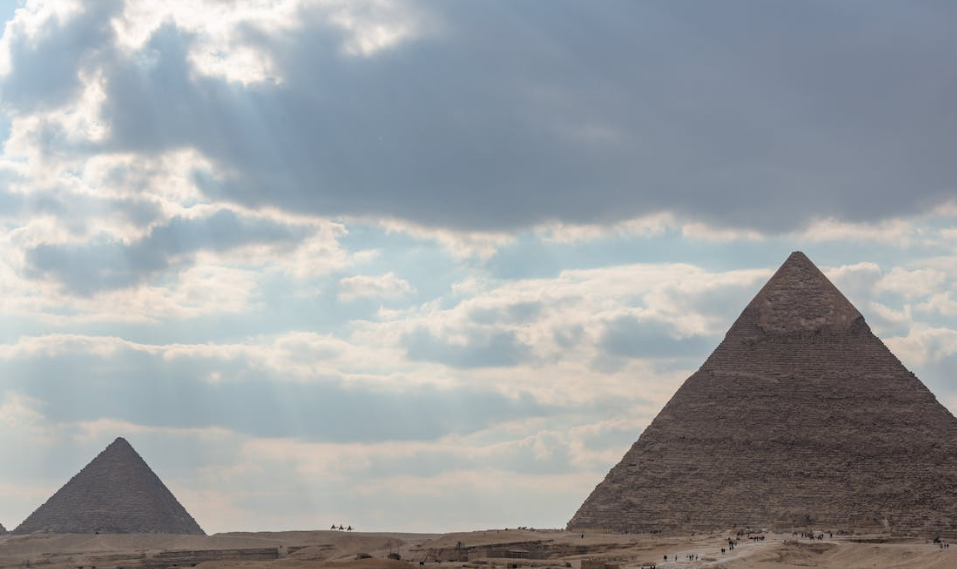
Although it was once the biggest church in Christendom, the Aya did not fill my heart with awe. It did not cause the metaphysical inertia I experienced the first time I saw the pyramids towering over my head. It did not make me feel as insignificant as I did when wondering among the forest of giant pillars at Karnak. It did not cause my jaw to drop open as occurred during a subsequent trip to Athens when I first encountered the Acropolis shimmering elusively above my head.


That said, the heights reached by the apparently free-standing dome are imposing. Perhaps what makes the Aya Sofia appear less than majestic is the general state of disrepair of the building. The huge scaffolding rising high into the dome for some much-needed restoration work scaled down the building’s grandeur, while the peeling paint and the spreading damp on the ceiling were cause for concern in such an important monument.


We entered the church from the Imperial Gate, oblivious that, once upon a time, only the powerful emperor and his procession could enter this way. How times change and who knows what access the tourists of the future will enjoy to today’s most exclusive edifices.


The Aya Sofia put me in mind of the Mezquita in Cordoba. They had both served as the temple of another faith before a (re)conquista had placed them in the hands of their rival religion. They even fell to the ‘enemy’ at about the same time. The key difference was that the Turks kept the basic structure intact, plastering over icons and putting Quranic script on the walls. The Spaniards decided to plant a giant cathedral right in the centre of the former mosque, a sight that is at such odds with the building’s geometric harmony that I’ll never forget how it seemed to rise out of the ground as if it had been spewed out from the bowels of the earth.


One of the more interesting corners of the Aya Sofia is on the second level where stories of intrigue lie behind the brick and mortar. There is the faded portrait of the colourful and cunning Queen Zoe who managed to rule Byzantium for decades by marrying and outliving several husbands, whose faces were painted over with the new ‘sub-hub’ once they were gone. Tired of hiding behind men, she finally made her sister co-regent and put her face up on the wall.


The Aya Sofia faces the Sultanahmet Mosque. Standing in between them, one is overcome by the sheer grandeur of these two competing edifices. Considering all the debate about Turkey and Islam’s place in Europe, I thought that the doubters should come and stand here to dispel any misgivings about the intimate relationship between the two.


Photo: ©2005 K. Diab/K. Maes

Concrete European link

In a way, the two structures embody – in bricks and mortar – what Turkey’s relationship with its European neighbours is partly about. The parallels and dichotomy between the two buildings speak of the rivalry and admiration the two closely related civilisations share. You only need to glance at the mosque to see that it was built with the Aya Sofia in mind.


Although it looks very similar, there are certain key differences. For instance, the mosque’s dome is not quite as ambitious and makes no attempt to disguise its supports. It makes up for this with seven magnificent minarets.


The Sultanahmet area is cluttered with history and, in the space of a few hundred metres, the visitor can leap through the centuries. A little further down from the mosque and the former church, forming a sort of triangle with the three, is the Hippodrome – the heart of the city and its political barometer since its very inception.


The arena is decorated with Byzantine imperial plunder, including the top third of an Egyptian obelisk (there must be more Pharaohnic obelisks outside Egypt than inside it!) and a column –once crowned with snakes – from the temple of Delphi. And, in classic style, I ranted – as I had done in Paris’s Place de la Concorde – about shipping the obelisk back to where it belonged. Katleen smiled humouringly and offered to get me my pill.


But it is at night that the two monoliths take on an ethereal and harmonious hue. We got a perfect view of this at the peculiarly named And hotel. Although the name looks (inexplicably) like an English conjunction, I suspect it is probably a Turkish place name.


Although the food, contrary to the Turkish norm, was instantly forgettable, And provides one of the most spectacular dining backdrops I have ever seen. Luckily for the kitchen, we spent more time feasting on the atmospheric view of the illuminated Aya Sofia and Blue Mosque to care too much about the bland and miserly And food passing down our gullet.


It’s the kind of ambience – glowing with incandescent mystery – that gives birth to or ignites passions. At the other end of the terrace, a Turkish family were celebrating a birthday in style. They had brought along a violinist who played folk songs. Pretty soon, they had moved on to a full-blown sing-along. Later in the evening, the mood had shifted to what sounded like agonised love ballads.


But for dining experiences, nothing beat the hospitality and warmth of Haweshi, a nice small restaurant run by two middle-aged friendly Syrio-Turkic brothers who had moved during their teenage years from the border region with Syria to Istanbul. They practised what little Arabic they could remember on us, discussed cuisine and culture in snatches, and tried to convert us to raki.


Photo: ©2005 K. Diab

Sultans of architecture

As befits a city with such a rich history, Istanbul is replete with distinguished architecture which is reflected in the wealth in its mosques, palaces and churches. Topkapi – which was at the heart of the Ottoman state for hundreds of years – is the most sublime example of Ottoman palace design.


One can see that the complex evolved during the heights of Ottoman achievements, as opposed to the Dolmabahce palace, which was built during the empire’s terminal decline in the 19th century, when it was branded the ‘sick man of Europe’. Sultan Abdelmacid who commissioned that sad specimen was trying to prove that Turkey was still a force to be reckoned with – but, in retrospect, he seems to have shot himself in the foot.


At Dolmabahce, kitsch is the word that most readily comes to mind, from the statues in the garden of lionesses tending their cubs, to the orientalist-heavy imagery of paintings expressing eastern ‘mystique’ which the Sultan commissioned Italian and other European artists to paint.


In contrast, Topkapi is a transcendent piece of architecture, with its  beautiful proportions and simple elegance. It was interesting to see what the palace’s massive haramlik was really like. The popular idea of the ‘harem’ being the Sultan’s pleasure palace, a massive hall jam-packed with reclining beauties says as much about western fantasies as it does about reality.


Although the Sultan had several wives and concubines, it was not a free-for-all orgy, as some western art would suggest, and there was a strict hierarchy and structure, with each wife occupying her own apartments. The haramlik, as it is more properly known, were really just the living quarters of the Sultan. However, the fact that future sultans were raised here, and wives enjoyed intimate access to the Sultan’s ear, the haramlik was a powerful instrument in state affairs.


Topkapi’s former treasury has been turned into a museum, and some of the riches the former contained are now on display there in this modern and stylish exhibition space. Walking around the riches on display there, the mind boggles as to how it must have looked when it was jam-packed full of the wealth and plunder of the empire.


Inside, there are royal seals, richly embroidered circumcision tunics, thrones, as well as daggers and swords made of precious metals and studded with fine stones. The museum also houses one of the biggest diamonds in the world. Topkapi is also home to swords reputedly owned by the prophet Mohamed and his companions, the shroud from the prophet’s tomb, as well as hairs that supposedly came from his hallowed head.


One can see that Istanbul, with all its mosques, shrines and Islamic artefacts was once at the centre of the Muslim world. And many of its citizens are still actively involved with this heritage. Some people go to Topkapi to see these ancient artefacts, whilst others head out to Eyuup.


©2005 K. Diab/ K. Maes

Khaled Abou Ayoub al-Ansari was the prophet’s standard bearer who fell outside the city wall either in battle, according to some written accounts, or of illness, according to the plaque at his shrine. Although the city did not fall into Muslim hands until Mehmet II managed cunningly to penetrate its defences, Eyuup, as he is known in Turkish, appears to be highly revered in Istanbul.


His shrine and mosque, which lie in the Eyuup district in the suburbs of the modern city, are popular local pilgrimage sites. The area surrounding his mosque is full of tightly packed graveyards, because centuries of nobility have wanted to be buried there, to be part of the saintly Eyuup’s inner circle.


We made friends with some children in the area and saw one boy in his circumcision suit having his photo taken by a fountain. I, for one, am glad that Egyptians do not have the practice of circumcising their sons when they are cognisant and, instead, do it when they are babies.


The courtyard between the mosque and the al-Ansari’s tomb was a hive of activity, with people from all walks of life milling about – from the cosmopolitan in smart city clothes to the rustic in traditional peasants attire. Inside his shrine, there were people everywhere engrossed in silent prayer. Many approached his tomb to kiss it and walked away backwards so as to face the hallowed shrine, bowing and mumbling silent prayers.


Photo: ©2005 K. Diab

Heavy metal church

Interestingly enough, not only is al-Ansari revered by Turks but he was – bizarrely – adopted as a saint by many Byzantines following the failed Arab siege of Constantinople. On the way back from Eyuup, we stopped off at the wealthy Greek Orthodox Patriarchy. The complex is made up of a dormitory for priests and monks, as well as the main church.


But for sheer novelty, nothing beats St Stephen of the Bulgars. This cast iron church is one of the oddest houses of worship we’ve ever seen. It is tucked away on a little island between two busy roads. Luckily for us, some special service had just come to an end and the flock were streaming out of the tiny temple, so the church was unusually open.


Both outside and in, the building was slowly rusting in peace.  You could see the rust under the thin paint and it had completely eaten away the iron in place. Inside, it was about the size of a village Sunday school and it was not visibly cross-shaped.


Above our heads was a balcony covering three walls. We climbed the weakening staircase that creaked painfully under our shoes to explore the upstairs which, among other things, contained a small choir room.


Being made of iron gave the structure a strange vibe. Perhaps it was the acoustics, or electromagnetic waves, but it felt a little weird to be on the inside. We wondered what it would be like in a thunderstorm, and whether the faithful would get a jolt if it was ever struck by lightening.


Why the Bulgarian Orthodox community chose iron is a baffling question – perhaps it was a demonstration of the cast iron strength of their conviction or to show their mettle to the Greek Orthodox patriarchs.


Whatever the reason, it is a unique structure. It was originally cast in Vienna and transported down the Danube. It once had a sister building in Vienna but that was destroyed during the bombing of the city in World War II.


Photo: ©2005 K. Maes/ K. Diab

Egypt on the Bosphorus

Most of Istanbul – at least the historic parts of the city – is on the European shore. The Asian side is mainly residential areas. Nevertheless, we felt the urge to cross into Asia, for the sheer novelty of being in the only city in the world that straddles two continents.


Our guidebook informed us that Mohamed Ali’s summer cottage was on the Asian shore. Being an Egyptian, I was naturally curious to see this particular relic. Mohamed Ali was, after, not only the Khedive of Egypt but is also widely acknowledged as being the father of the modern Egyptian state (the Atamisir, to coin a phrase), despite being Albanian.


At one point in his audacious career, the dominions under his control were said to rival those ruled over by the Sultan. But the Khedive found it expedient to continue to defer ostensibly to the crown in Istanbul and never declared himself sultan or king. I imagined that his summer pad in Istanbul must be quite an affair.


Unfortunately, we were never to find out. After enduring a two-hour traffic jam to make it out to Bebek to catch the ferry to the other side, we found out something that our guidebook had overlooked, the boat did not run on Sundays, an old couple sitting at the ferry stop informed us.


However, we did get to see the Egyptian consulate which used to be the Khedive Ismail’s summer residence. It was an attractive white mansion that has fallen on hard times and needs desperate repairs.


Photo: ©2005 K. Diab/K. Maes

Hanging in Istanbul

Bebek is the weekend retreat for Istanbul’s most affluent. The standard of clothes and automobiles went up a couple of gears as clean-cut Istanbulites paraded along the promenade of the marina, while other’s kicked back on the decks of their private yachts. Groups of well-groomed trendy young people in designer fashion bobbed past us with practiced – sometimes synchronised – gaits. Others huddled excitedly outside the gates of a cinema. One poster caught my eye: a new (at the time) French film starring Omar el-Sharif entitled Monsieur Ibrahim.


During our stroll, we stopped for a must-do Istanbul experience: a fish sandwich by the Bosphorus. A handsome young couple were working the charcoal grill beside the open van. The woman expertly gutted the freshly caught fish, which she kept in an icebox, and the guy grilled them to perfection, squeezing lemon on to them and lining the bread with a nice dressing and salad.


One end of Bebek is teeming with waterside cafes which are overflowing with people, drinking hot and cold beverages, raki and beer, playing board games and cards. Although the outdoor consumption of alcohol is permitted almost everywhere, there is a sanctified radius of some 100m around the local mosque where it cannot be consumed, and all the cafés there served only soft drinks and infusions.


Water is such an integral part of Istanbul’s existence. Fishing seems to be a universal pastime, people love to socialise and dine by the Bosphorus, ferries are accepted modes of public transport. And any stroll along the water is likely to throw up a few surprises. For instances, during an earlier walk by the Sea of Marmara, we came across a semi-capsized tanker, bent like some sort of drunken tramp, decaying quietly and messily in the bay. The stagnant pool of oil and rust trapped between the dock wall and the ship was enough to give me the fleeting sensation of wanting to become a Rainbow Warrior and handcuff myself to the rotting hulk.

Photo: ©2005 K. Diab/K. Maes


After Bebek, we endured a long traffic jam back to town, and decided to hop off half way at Ortakoy crafts market, another haven for the young and trendy, albeit a more Bohemian crowd. Istanbul is obviously a rapidly changing metropolis. We wanted to check out some traditional cabaret music and dancing at a mehane. We searched around for a famous one in the area but failed to uncover it. Two friendly policemen radioed the station to get the bar’s coordinated and led us to what turned out to be a boarded shop! Demand for mehanes was obviously waning among the fashionable crowd that had revived the area.


The area around Taksim Square is also a favourite with young people and there are plenty of bars and clubs to cater for a wide range of tastes. We were drawn to a smallish café by the music it was playing. Sitting there chatting to one of the two brothers who ran it, we felt that, were we ever to live in Istanbul, this would be the kind of place we’d hang out.


ã2005 K. Diab. Unless otherwise stated, all the content on this website is the copyright of Khaled Diab.