From the heart of empire to the margins of history


Photo: ©2005 K. Maes/K. Diab

Axum is Ethiopia’s oldest existing city. It was the capital during arguably the country’s heyday in the first millennium AD. No one knows exactly when the city was established but recent evidence suggests the 1st century BC. However, considering that so little excavation has been carried out in Ethiopia, this date is likely to be revised further.


The Axumite kingdom not only ruled over its African heartland but its circle of influence stretched into Arabia. It was recognised as one of the most advanced and influential empires of its age. In fact, it was the junior rival of the Byzantines and Persians.


It was one of the first countries in the world to adopt Christianity, after two shipwrecked Syrian monks in the third century popularised the faith there. One of them sailed for Alexandria and laid down the close historic links between the Egyptian Coptic Church and Ethiopian Orthodox Church – which is often erroneously referred to as the Ethiopian Coptic Church.


Axum also played a crucial role in the formative years of Islam. The prophet Mohamed was born in the Year of the Elephant, which was so-called because the Abyssinians mounted a major, but unsuccessful, military offensive against Mecca. He also sent his early followers there to take refuge from the persecution they were facing from Mohamed’s own Querish clan who ruled over the trading city.


“If you were to go to the Habbash (Abyssinia),” Mohamed told them, “it would be better for you until such time as God shall relieve you from you distress, for the king (negus) there will not tolerate injustice and it is a friendly country.”


Mohamed returned the favour to the negus by giving Abyssinia a special place in Islam and calling on subsequent generations of Muslims to leave it alone. But the rising star of Islam also seemed to have sealed the fate of Axum which appears never to have recovered from the loss of its Red Sea trading routes to the Arabs.

Photo: ©2005 K. Diab


After Lalibela, Axum struck us as an affluent and relaxed city. Although it is a largely hassle-free town, low season meant that we were prime targets for hustlers and bored young children. Paradoxically, it would also prove to be the town where I’d have my biggest confrontation – which almost turned ugly – with a hustler who called himself Tom.


Despite its long and distinguished history, Axum does not stretch very far. On our first stroll through the town to get the lay of the land, we soon reached the outskirts of the town, which were more village-like, or ‘biblical’ as a group of South Africans in our hotel described it.


The weather in Axum was the hottest and steamiest we’d encountered so far on our trip, and the sun was pretty intense, forcing us to stop for regular ‘Ambo stops’ – as Katleen called them – to enjoy the supposedly natural bubbles of Ethiopia’s best mineral water which is served in helpful half-litre bottles.


Pillars of the community

Axum’s stellae are possibly its best-known artefacts, particularly since Italy agreed to return one of these famous obelisks which had stood in Rome since the days of Mussolini.


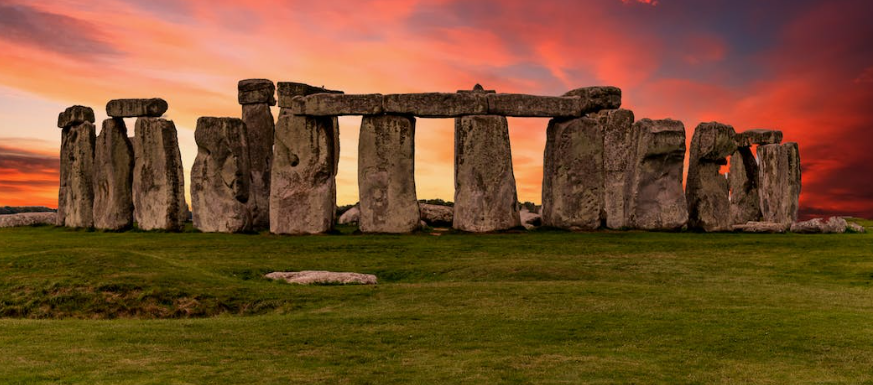
Most of the city’s obelisks stand in the Stellae Field. From its name, we’d expected some Stonehenge-like plot of green land dotted with a small forest of abandoned obelisks – and that was kind of what we kept an eye out for as we reached the outskirts of the city.


After backtracking into town, the stellae turned out to be located in what was less a field and more a yard just off one of Axum’s main squares which had been established by a former mayor as a tourist attraction. In place of the tens of stone monuments we were expecting, there stood only half a dozen obelisks, albeit of impressive beauty and grace. The first pieces of the returned obelisk lay strewn around the site chained to the ground.


Although not as ancient as Egyptian obelisks, the stellae date back to pre-Christian Ethiopia, and are believed to have represented the power of the king and his lineage. The face of each obelisk – the highest of which stands at some 30m – looks like a house, with several storeys of windows and a door at ground level.


Near the Stellae Field is the so-called Queen of Sheba’s pool which actually has no historical link with the legendary queen, since it was built in Christian times. It does, however, have an important practical link for the townsfolk, many of whom seem to depend on its questionable water to fill their buckets and jerry-cans.


Photo: ©2005 Katleen Maes

Cactus hill

About half an hour away on foot is the sixth century King Kalib’s (whose name means Dog) Palace. The walk is along a secluded footpath that weaves its way through agricultural fields. The path is lined with strange and stunning desert foliage and large cactus-like trees, which I think are called euphorbia, with large prickly leaves at the base and a long bluish-green stem with bright yellow flowers. Birds of matching colour flitted around these outlandish trees.


Once we arrived at the palace, we received the unpleasant shock that we needed tickets that could only be got from the tourism office in town! That meant we had to return the next day to see the actual insides of the palace of which only a couple of subterranean burial chambers survive.


A signpost from Kalib’s Palace points towards the Pantaleon church which stands on top of a very high hill. We headed in its general direction and took the serendipitous turn off the road to another church with no name on top of a nearby hill which we, at first, mistook for the Pantaleon.


As we got nearer to the top, we were greeted by an agreeable clanking and chiming sound that put me in mind of Buddhist monasteries. On the roof were two metal wheels which rattled in the gentle breeze.


The view of the surrounding valleys and mountains was uninterrupted for miles and miles. One of those mountains, we were told by locals, separates Ethiopia from Eritrea. We could also see a picturesque little house lodged precariously on top of a rocky precipice that was the actual Pantaleon.


The next day, on a hike we started from the other side of town, we visited the Pantaleon church itself, as well as Kalib’s ruins. The actual climb is somewhat easier than it looks from a distance because the solid mass of rock on which the tiny church stands has steps cut into it. However, having been spoilt the previous day, the view from here seemed disappointing.


The ambience was not helped by the church’s cloying and ingratiating watchman and the fact that Katleen was not allowed to make the final ascent to the church with me – but the guy wanted her to buy a ticket nonetheless!


Is this the final resting place of the Ark of the Covenant?

Photo: ©2005 Khaled Diab

Keepers of the hidden ark

Following our long morning hike, our second afternoon in the city was spent touring the Axum Archaeological Museum and the St Mary of Tsion Church, the home of the legendary Ark of the Covenant.


Owing to the lack of visitors in town, the museum’s curator had not realised that it was opening time until we arrived and he opened up the building especially for us. If the word ‘museum’ evokes images in your mind of the Egyptian and British Museums or the Louvre, then you are likely to be sorely disappointed by Axum’s answer to them.


The museum is made up of two small chambers crammed full of pottery which is of undoubted major archaeological interest but gets a bit tedious after a while. That said, there is some superb artwork on the pottery and the overview of Axumite history on the walls makes for an interesting read. The most interesting artefacts were some tablets written in the ancient Sabean script of Southern Arabia upon which Amharic is based.


A deacon at the St Mary of Tsion church gave us a guided tour of the compound. The original structure no longer stands, although the foundations of one of its original temples are left untouched as a mark of respect.


The deacon started off by showing us the crowns of some of Axum’s former rulers. Then we entered the hideous modern monstrosity built by Haile Selasie. The only thing that recommends this church is its size. Inside, is an ancient goatskin Bible with exquisite illustrations, left inexplicably out in the middle of the main hall.


Only I was allowed into the large main monastery which was built by King Fasil of Gondar. Inside, the holy of holies is protected by a large door decorated by two of the apostles. Behind the door, in an area closed off to visitors, lies a replica of the ark.


The actual ark supposedly rests in an outhouse where, the deacon explained, one monk lives permanently, his raison d’etre being to guard the sacred artefact. No one else is allowed anywhere near the ark and, just before the monk is due to die, another one is prepared to take over the holy function.


Photo: ©2005 Khaled Diab

A restaurant for two

We decided to have dinner at the Yeha Hotel on the second evening, after the good impression we’d got there at lunch the first afternoon. The hotel sits advantageously on a wooded hill with a panoramic view of the city’s major sites – the Stellae Field and the St Mary of Tsion Church.


As we watched the sun go down behind a nearby hill, we could hardly credit that we were the only people enjoying this magnificent view. Although we enjoyed the exclusivity of our evening, our hearts went out to the staff and owners, even if it was the government.


The maitre d’ was a thin, middle-aged man dressed in a loose-fitting black suit. His sombre, weary features hung as loosely off his face as his clothes did off his body as he shuffled towards us with a laboured gait. His measured pace seemed to match that of the establishment in which he worked.


It took him quite some time to set our table and exchange the set menu for the a la carte one, but the wait for the food went unnoticed as we soaked in the atmosphere. Our friendly attempts to talk to him and break through his serious demeanour caused him to loosen up a little and try to chat with us in his broken English.


For our third day in Axum, we decided we’d earned the right to take it easy and we spent the morning and early afternoon on the Yeha Hotel’s terrace reading, writing and having lunch. We also went shopping and strolled aimlessly around the town.


We even took a long evening walk out of town where we encountered a galloping donkey trying to escape its owner and a group of children who looked at us as if we’d  just stepped off a spaceship and sat down on the little road bridge near their stomping ground.


Photo: ©2005 K. Diab

Tigrayan trouble stirring

On the first evening, back at the Africa Hotel – where you hold the whole of Africa in your hands (at least the key-ring version of it) – everyone was glued to Eritrean TV, hanging on every word emanating from the flickering box. Judging by the set up, it looked like a political programme and we wondered whether this was a regular night’s evening in a border region or whether there was trouble brewing at the frontier.


While we were waiting for our dinner, Tom the hustler (Tadius was his real name, I believe) joined us uninvited at our table. He offered to sell us just about everything that was not nailed down. He first started by proposing to guide us around Axum. We explained that we weren’t interested because we preferred to explore by ourselves and the city was so compact that it was very easy to navigate.


Undeterred, he soldiered on. Next on his menu were daytrips to Mekele or Debre Damo. We were interested in going to the beautiful stone Debre Damo monastery, despite the fact that women are not allowed in. The mountains in the area are beautiful and the monastery is surrounded by sheer cliffs. In fact, the last 15m to the summit can only be reached via a leather rope which is supposed to symbolise the magical serpent that took the monastery’s founder, Abuna Aregawi, to the top when he went there alone in his hermitage.


However, we did not trust Tom and the prices he was quoting were higher than the going-rate for such daytrips. We politely declined his offer. Unrepentant, he then proceeded to retrieve a steadily growing stream of tourist kitsch from his pockets and a leather pouch around his waist until our table looked like a miniature souvenir shop.


Apparently oblivious to the comic absurdity of his get-what-you-can-out-of-the-dumb-tourists approach, he ploughed on and we continued to hold him off. Keeping his piece de resistance till last, he informed us that he had antique coins, “some from BC,” he claimed.


Disbelieving his claim, we proceeded to inform him that selling antiquities was illegal. He said that it was okay and everything could be taken care of. Katleen told him that he should not be squandering his country’s history which was not his to sell, and if he had coins, he should give them to the Axum museum. He protested that the museum doesn’t pay.


Contributing my penny’s worth, so to speak, I suggested that the museum was not obliged to pay for antiquities and that even if he genuinely had antiquities for sale, I was not interested, since being Egyptian I knew what it was like to have more of your history outside your country than inside it. Growing impatient at his tenacity more than anything else, I asked him if he could leave us alone to eat our dinner when he showed no sign of leaving.


Tenacious Tom’s tantrum

But this would not be the end of our encounter with Tenacious Tom. The next day, he contrived to run into us at least twice on the street. In a desperate bid to get rid of him, I offered him a price for a daytrip that I knew he wouldn’t accept.


The second evening, after our beautifully scenic dinner on the panoramic terrace of the Yeha Hotel, and our half-hour digestive stroll back to the Africa Hotel, we decide to have a couple of beers before we turned in.


“Bon soir,” one of Tom’s gang of hustler called out from a nearby table. This was the third or fourth time he’d addressed me in French and I decided to find out why. He said that I looked like I spoke French, so I asked him what exactly it was about me that suggested that. “You look African American,” he explained, which sent me into a miffed silence, and Katleen and I tried to figure out what the hell he was on about.


As we were enjoying the cool evening air and the good Ethiopian beer, Tom gate-crashed our peace and quiet yet again trying to sell us daytrips yet again. I told him that, even if he offered us a free trip, I didn’t want to go anywhere with him. A friend of his tried to come and calm the situation and salvage what he could from the disaster Tom had created.


We declined his offer for a better deal and him as guide, explaining that it was a little late to arrange anything – we’d already psyched ourselves down for a day of relaxation.


Just before we went to bed, we heard a knock at the door. It was the hotel manager saying there was a driver outside who said he’d come to make arrangements for the morning. We asked him to get rid of the guy and expressed our displeasure about Tom and his gang. The manager complained bitterly about how they were hijacking his establishment and how even the police was doing nothing.


In the morning, the new guy joined us at breakfast and his friendlier demeanour won us round to agreeing to a trip at a price that sounded reasonable. He said he would bring the jeep driver to finalise the negotiation. The first sign that things weren’t as they should was that he turned up with a microbus.


I told him we were expecting a 4x4 and he said this was just as good. They invited me in to try it out and talk to the driver. Then the driver added on an extra €20 to the price I had agreed with the other guy. Totally drained by this stage, I fell into a fuming silence and told them to take me back to the hotel.


When I returned, Katleen admitted that she was a little concerned about me because I was gone for so long. “I wasn’t sure if they’d driven you somewhere isolated and robbed you.”


But the story had an epilogue. That evening, an angry Tom confronted me on my way to buy some water, accusing me of having complained to the tourist office. I told him I’d done no such thing. “Have I caused you any trouble?” he asked. Confounded that he could even ask such a question, I told him I didn’t want to speak to him.


All through dinner, he sat at a nearby table throwing me aggressive looks which I ignored as Katleen and I chatted and joked, pretending nothing was going. He disappeared for a while and then re-emerged drunk and rowdy and threw a tantrum near me, hurling a steady stream of abuse my way.


“All Egyptian are liars,” he said, revealing an unexpected bout of racial discrimination. I finally lost my cool and jumped out of my chair, warning him that if he didn’t shut his mouth, I’d break it for him. In a panic at my rage, he ran out on to the street and picked up a rock. I mocked his picking up a rock and told him that if he wanted to fight, he should come here and use his fists.


While this was going on, Katleen had announced loudly that she was going inside to call the police. She returned during our standoff and announced the police were on their way. Tom dropped the rock and vanished into the darkness down the street. His friends followed suit, one of them in mid-chew, leaving the rest of his dinner on the table.


Run in with the police

Their haste was uncalled for as the police took over an hour to arrive. The policeman was wearing a woollen blanket wrapped around his shoulders and torso and was carrying a Kalashnikov over his shoulder. The hotel manager translated what I was saying and the policeman wanted us to come down to the police station the next morning to make a formal statement so that he could suitably punish the guy.


We asked for an explanation of what “punish” meant and the policeman said that he would keep him in custody for a day or two to teach him a lesson. Concerned at what this “lesson” would involve, we asked if he couldn’t just let him off with a warning this time.


To get out of dropping Tom into too much trouble, we explained that we were catching a flight the next morning. The whole incident caused a stir of excitement in the hotel in this normally quiet town. We found perfect strangers come up to console us and offer their friendly apologies for Tom’s behaviour. We were at pains to point out that we would not allow a run-in with one person to colour our picture of a great city and its friendly locals.


The next morning, the hotel manager joined us on the microbus to the airport and we found ourselves taking a detour through unpaved side streets. He explained that he needed us to make a formal statement to help his case for evicting the troublemakers from his hotel.


The police station was a collection of small buildings that did not much resemble a police station. The officer had not yet arrived and so, with a great deal of reluctance because of the possible repercussions for Tom, I offered to write an account of what happened in English on the way to the airport.


Read Part VI


ă2005 K. Diab. Unless otherwise stated, all the content on this website is the copyright of Khaled Diab.